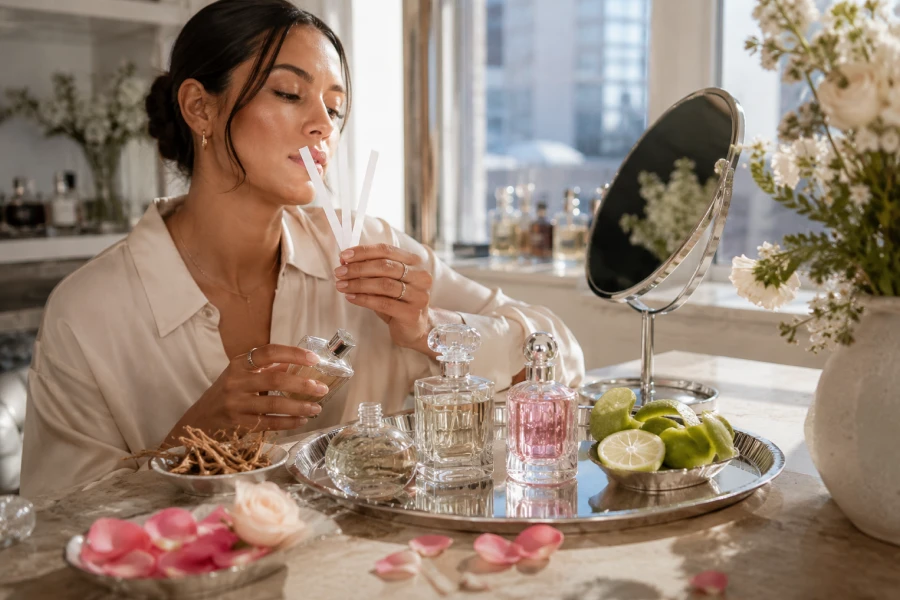
Learning scent language becomes easier when the first step is small. Many people search how to identify perfume notes because perfume counters feel overwhelming. The answer begins with one honest impression. Ask whether the spray feels bright, soft, warm, powdery, green, or sweet. Do not name ten notes immediately. Let the first category create a foundation. Then look for familiar references inside that category. A calm perfume testing method can help you slow the process. The goal is not instant accuracy. The goal is a repeatable way to notice more each time. Small observations reduce the pressure to sound expert. They also keep the experience enjoyable. A relaxed nose usually learns faster.
The drydown is where many surprises appear. A sparkling top note may fade into musk. A juicy opening may settle into woods. A sharp floral may become creamy after half an hour. Give every test at least three checkpoints. Smell once at the start, once after twenty minutes, and once later. Write only short impressions at each stage. This timeline reveals movement that paper strips often hide. It also explains why a scent changes during the day. Patience makes the perfume easier to understand. Let the scent finish its conversation. The final impression may change the entire opinion. That delayed judgment is often the smartest one.
Comparison teaches the nose faster than memorization. This note-spotting skill becomes practical when you connect perfume to real objects. Smell a lemon peel, black tea, cedar drawer, vanilla bean, or fresh herb. Then smell the perfume again and look for echoes. The match may not be exact, and that is fine. Perfumery transforms materials into impressions. A friendly scent discovery routine makes those echoes easier to track. With practice, your descriptions become clearer. You begin recognizing families before reading the bottle notes. That recognition makes testing feel more confident. Use kitchen and closet references without apology. They make scent language more immediate. The comparison only needs to help you remember.
A tired nose creates bad decisions quickly. Limit every session to a few fragrances. Avoid smelling too many sweet or heavy scents together. Drink water and step away from the counter. Let clean air do most of the resetting. Coffee beans rarely solve true scent fatigue. Skin also needs space between sprays. Test on different areas when comparing two options. Keep blotters labeled by placement, not by memory. Clear conditions make each impression more trustworthy. Your nose deserves rest between impressions. Better spacing makes the next scent clearer. This discipline improves accuracy without making testing dull.
Brand descriptions sometimes disagree with your skin experience. This note-spotting skill requires trust in both information and perception. A listed rose note may smell like soap to you. A vanilla base may feel more smoky than dessert-like. Your nose may notice musk before citrus. That does not mean you are wrong. A thoughtful personal fragrance map records what you perceive rather than what you expected. Over time, these notes reveal your scent vocabulary. They also reveal which materials behave well on you. Personal evidence matters more than perfect terminology. Trust the difference between listed notes and lived impressions. Both can be useful in different ways. Your skin has its own voice.
Home practice removes the pressure of the sales floor. This note-spotting skill improves when you test in familiar light and air. Use small samples instead of rushing full bottles. Spray one fragrance in the morning and follow it through the day. Keep notes brief enough that you will actually write them. Use words connected to mood, texture, and memory. Compare your notes with the published description afterward. This order keeps your reaction honest. After several tests, patterns become obvious. Your next perfume choice feels informed rather than lucky. Repeat the exercise with one fragrance you already own. Familiar scents reveal details slowly. Practice becomes easier when the bottle feels comfortable.
Home practice should feel curious rather than strict. Choose one sample and one quiet morning. Smell it before reading the description. Record the first three words that arrive. Return after breakfast and write three more. Check again in the afternoon. Compare the stages without judging yourself harshly. Look at the official notes only at the end. Notice where your impressions overlapped. This gentle repetition trains the nose without pressure. The skill grows quietly through repetition. Soon you notice details before reading notes. That confidence changes every shopping trip. Keep the exercise light enough to enjoy. Repeat it with different scent families. The practice becomes more natural every week.



Leave a comment