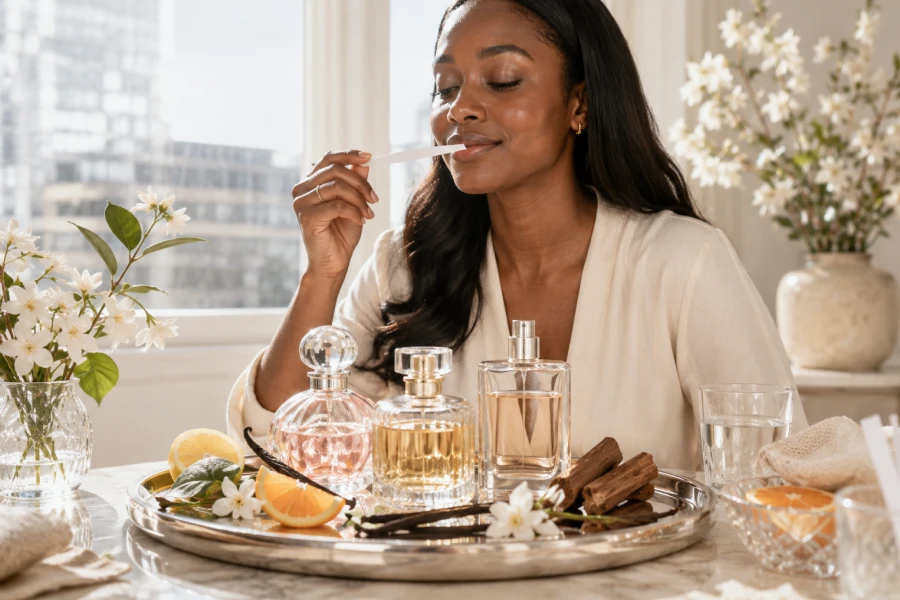
Perfume can feel confusing when every bottle promises a different mood. Fragrance notes for beginners makes that experience calmer by giving the nose simple anchors. Instead of chasing perfect expertise, you begin with observation. You smell brightness, warmth, sweetness, dryness, or softness first. Then you connect those impressions to familiar materials. Citrus may remind you of peel, tea, or sunlight. Woods may feel clean, smoky, creamy, or pencil-like. A clear fragrance note basics approach gives each impression a place. The language grows slowly, and that is enough. Once the mystery softens, perfume becomes more enjoyable to explore. The first lesson is permission to go slowly. Your nose learns through repetition, not pressure. Simple words often describe a scent very well.
A scent does not stand still on skin. The opening may sparkle for ten minutes and then disappear. The middle can feel smoother, rounder, or more floral. The base often stays longest and decides the memory. Smell the same fragrance at several moments. Do not judge it only at the counter. Give your skin time to change the composition. Write down simple words before reading descriptions. Your notes may be more useful than the brand story. This habit turns testing into discovery rather than pressure. This timeline makes perfume feel alive. It also reveals why quick judgments can mislead. The later stage may become the true favorite.
Vocabulary works best when it stays personal at first. This scent-learning approach should not begin with rare terms. Start with foods, places, fabrics, weather, and memories. A perfume might smell like clean sheets or warm spice. Another might feel like green stems after rain. Those descriptions may sound informal, but they carry real information. A simple beginner perfume education process helps you translate those reactions later. You can learn formal note names after the feeling is clear. This order keeps the nose relaxed. It also prevents memorized vocabulary from replacing honest perception. Personal language is not less sophisticated. It is the bridge toward formal terms. Confidence grows when words match real perception.
Marketing language can be beautiful and still distract you. A bottle may mention romance, power, or escape. Your skin may tell a different story. Separate the emotional promise from what you actually smell. Notice whether the scent feels fresh, dense, airy, sweet, or dry. Then consider whether that effect suits your life. A dramatic perfume may be lovely but hard to wear daily. A quiet fragrance may become unforgettable through repetition. The point is not to defeat marketing. The point is to keep your own reaction in charge. Let the scent answer before the copy does. That order protects your own taste. It also makes each test more honest.
Patience protects beginners from buying too quickly. This scent-learning approach becomes useful when you revisit the same scent more than once. Temperature, mood, and skin condition can change perception. A perfume that felt sharp on Monday may feel elegant on Friday. Spray on a blotter first, then test skin later. Compare only two or three scents at a time. A focused perfume note breakdown keeps your impressions from blurring together. Step outside when your nose feels tired. Fresh air resets judgment better than forcing another test. Slower testing leads to smarter choices. Patience creates a better relationship with fragrance. It gives the perfume room to unfold. The slower method often feels more luxurious.
Shopping feels easier when you know what to ask for. This scent-learning approach can turn vague preferences into useful requests. Instead of saying you want something pretty, name the effect. Ask for creamy woods, soft citrus, transparent florals, or warm vanilla. Notice which families make you lean closer. Notice which ones become too loud. Keep a short list on your phone. Bring it back whenever you test something new. Over time, the pattern becomes clear. You stop searching randomly and start building taste. Use the same request language several times. Patterns will appear across different stores and samples. Those patterns become your scent signature.
Shopping becomes easier when your notes travel with you. Keep a short scent record on your phone. Include words about opening, middle, and base impressions. Add whether the perfume felt casual, polished, cozy, or bright. Mention headaches, compliments, or quick fading. Bring that record to every new test. Ask for scents that match the successful patterns. Avoid repeating bottles that failed for the same reason. The list becomes more helpful over time. Your fragrance language grows through lived experience. The process turns confusion into curiosity. Each bottle becomes easier to read. Perfume starts feeling personal instead of intimidating.


Leave a comment