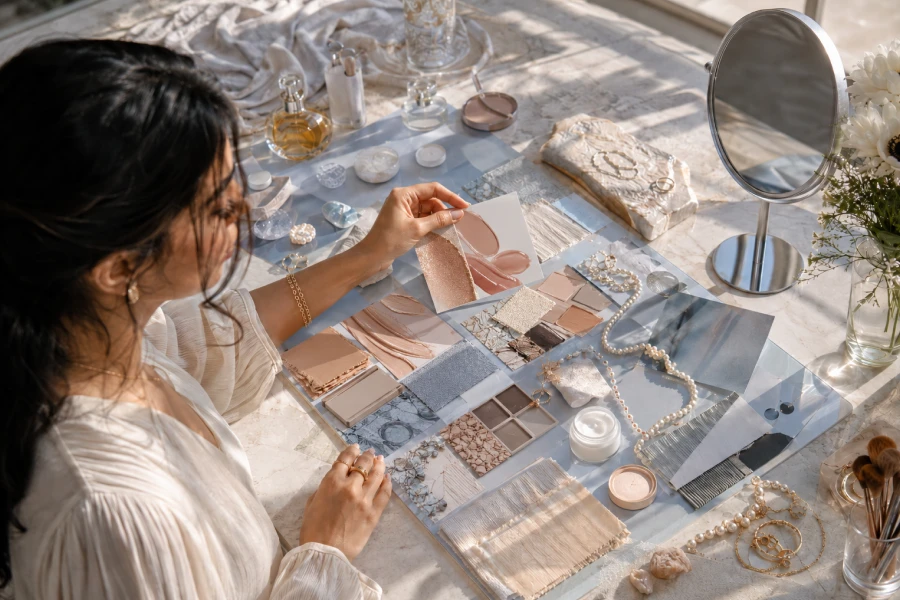
A strong beauty direction rarely begins with a product list. Beauty mood board creation starts with the feeling you want people to notice. The feeling might be polished, sunlit, romantic, minimal, or softly dramatic. Once that mood is clear, colors and finishes become easier to choose. A cream highlighter means something different beside linen than beside patent leather. A rose lip changes mood when paired with brushed gold. A helpful beauty aesthetic system lets those small signals speak together. It turns the board into a visual language. You can read that language before touching your makeup bag. That makes the finished look feel intentional from the beginning. Atmosphere gives every later choice a reason. It also keeps the process from becoming purely decorative. The board begins with emotion before technique.
Objects often reveal style better than face photos. A satin ribbon can explain softness without suggesting a specific person. A ceramic dish can show a preference for clean, pale neutrals. A citrus peel may signal brightness and freshness. A velvet scrap may suggest depth, shadow, and evening light. Place these objects beside actual cosmetic textures. Then notice which combinations feel believable. Remove anything that creates confusion rather than clarity. The board should have personality without becoming cluttered. When objects tell the truth, the beauty choices become sharper. These pieces should feel specific rather than expensive. Their job is to describe mood clearly. Ordinary objects can carry surprisingly precise beauty cues.
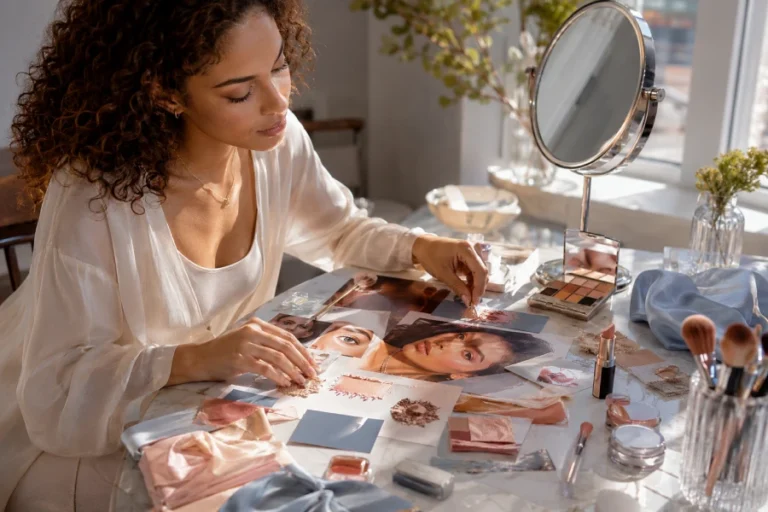
Products deserve a place on the board because they expose reality. This beauty planning process becomes practical when powders, balms, and creams join the images. A lipstick bullet shows depth more honestly than a filtered photograph. Foundation texture reveals whether the mood leans matte or radiant. Mascara shape can suggest softness, lift, or definition. Arrange products near colors that explain their purpose. A clear wearable makeup ideas plan grows from that physical comparison. The board stops floating in imagination. It begins to guide actual application. That makes the creative process easier to repeat. Real products keep the concept honest. They also show whether the idea fits your hand. A beautiful board should still survive application.
A board should edit like a small wardrobe. Keep the pieces that work together across different occasions. Remove the ones that demand an entirely separate beauty personality. Choose a daily expression, a polished expression, and a playful expression. Let each expression share at least one color or texture. This keeps the collection cohesive. It also makes the board feel designed rather than assembled. Empty space matters as much as the chosen images. It gives your eye somewhere to rest. A clean edit makes every remaining choice feel more confident. Think of this step as styling, not deleting. Every remaining piece should earn attention. The edit gives the board its quiet authority.
The board becomes most valuable after the first version is finished. This beauty planning process can guide shopping, packing, and seasonal refreshes. Use it before a trip to select fewer products. Use it before an event to avoid last-minute panic. Use it when a trend looks tempting but uncertain. A practical makeup style direction can answer whether that trend belongs to you. The answer may be yes with small changes. It may also be no, and that is useful. Good direction saves money and time. It also protects personal taste from constant outside noise. Use the board whenever choice fatigue appears. It can settle indecision before shopping begins. That usefulness makes the board more than decoration.
Flexibility keeps the board alive instead of decorative. This beauty planning process should change when your routine changes. A new haircut may shift the balance of color. Different work settings may call for softer finishes. Seasonal light may make one palette feel fresher than another. Review the board monthly without starting over. Replace only the pieces that no longer fit. Keep the strongest elements as anchors. This rhythm keeps your style evolving without losing identity. The result is a beauty reference that stays useful, current, and yours. A living board should never feel finished forever. It should follow your taste as it matures. That movement keeps the process inspiring.
A flexible board should invite updates without losing identity. Keep the central mood visible. Replace supporting pieces when they stop feeling current. Add new textures only when they clarify the story. Remove images that create comparison or pressure. Let products prove whether an idea works. Keep one small area for experiments. Keep the rest stable enough to guide you. This balance prevents boredom and clutter. The board stays creative while remaining genuinely useful. The final version becomes a personal beauty compass. It can guide small changes without demanding reinvention. That balance keeps style steady and fresh.


Leave a comment