
Fragrance families make more sense when you connect them to real days. Perfume scent families explained through mood feels clearer than memorizing a chart. Fresh scents often suit mornings, heat, and clean fabrics. Floral scents can feel romantic, polished, airy, or vintage. Woods may bring calm structure and quiet depth. Gourmand notes can feel cozy, playful, or too rich. A useful fragrance family clarity approach starts with how you want to feel. Then the categories become practical instead of academic. You begin choosing perfume by situation. That makes the whole subject easier to enjoy. Mood makes every category easier to remember. It also connects fragrance to clothing and setting. The family becomes useful because it has a purpose.
Texture matters as much as family name. A floral can feel watery, creamy, powdery, or jammy. A woody scent can feel smoky, dry, milky, or polished. Citrus can sparkle sharply or soften into tea. Vanilla can become airy or dense depending on the blend. Describe the texture before deciding whether you like the family. This detail prevents unfair judgments. You may dislike heavy florals but love transparent ones. You may avoid sweet scents until they feel sheer. Texture opens more possibilities than labels alone. Texture turns broad categories into personal preferences. It shows why two similar families can feel different. This layer gives your taste more precision.
Families should guide you without trapping your taste. This fragrance-family framework properly leaves room for overlap. Many fragrances sit between floral, amber, musk, woods, and citrus. That blending is why perfume feels alive. A rose scent may become spicy with pepper. A fresh scent may feel warmer with musk. A flexible fragrance learning system helps you notice combinations instead of forcing categories. Use families as starting points, not final verdicts. The best discoveries often happen at the edges. Your favorite scent may belong to more than one world. Overlap is not a problem to solve. It is part of perfume’s charm. Flexible categories make discovery more generous.
Comfort reveals more than a quick compliment. Notice which fragrance families you keep wearing after purchase. Some scents impress immediately but feel demanding later. Others seem quiet and become daily favorites. Track when you reach for each sample. Morning choices often reveal ease. Evening choices may reveal confidence. Weather can change which family feels right. Clothing style can also shift the answer. The pattern teaches you what belongs in your real life. Wear patterns tell the most practical story. They show which scents earn repeat use. The quiet favorites deserve real attention.
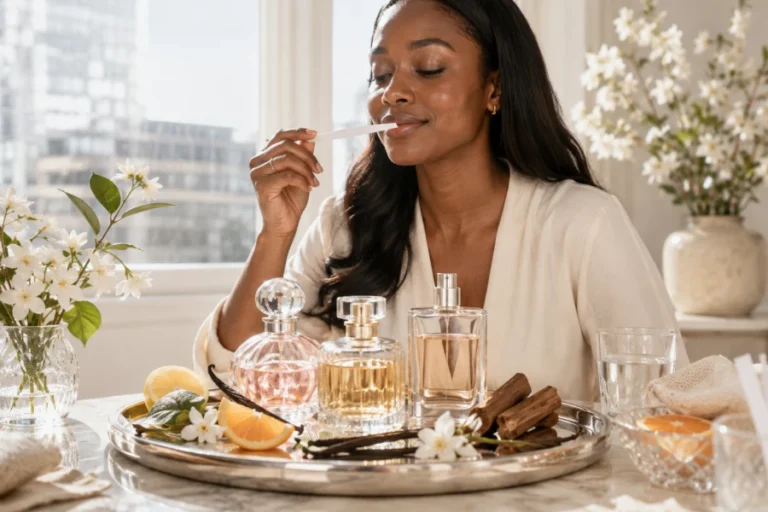
Sampling becomes more efficient when families guide the search. This fragrance-family framework can help you avoid testing twenty unrelated bottles. Choose one family you know, one adjacent family, and one surprise. Compare them slowly over several days. This method gives your nose contrast without chaos. It also helps sales associates understand your direction. A smart scent wardrobe planning approach turns sampling into a curated experience. You learn what repeats across the winners. You also learn what consistently fails. Both lessons save money. Sampling with contrast keeps the session organized. It also prevents every scent from blending together. A smaller test can teach more than a crowded one.
A fragrance wardrobe works best when each scent has a role. This fragrance-family framework can help you assign those roles clearly. Choose something fresh for daytime ease. Keep a soft floral or musk for polished moments. Add a warmer scent for evenings or cold weather. Consider one expressive bottle for celebrations. Avoid buying five fragrances that do the same job. Variety should support your lifestyle. It should not create confusion. With clear roles, every bottle earns its place. Clear roles make a collection feel intentional. They also stop bottles from competing for the same moment. That organization creates pleasure every morning.
Building a wardrobe becomes easier when each family has a reason. Choose one scent for clean daytime comfort. Choose another for softness and closeness. Keep a warmer option for evenings or cold weather. Add a brighter scent when you want energy. Test whether any two bottles do the same job. Remove overlap before buying more. Let occasion guide the collection. Let comfort decide the favorites. A balanced wardrobe feels expressive without becoming crowded. The final wardrobe should feel edited but expressive. Each family can serve a different version of you. That is where fragrance becomes style. This structure also makes gifting easier. You can describe preferences with useful detail. That clarity helps every future discovery.



Leave a comment