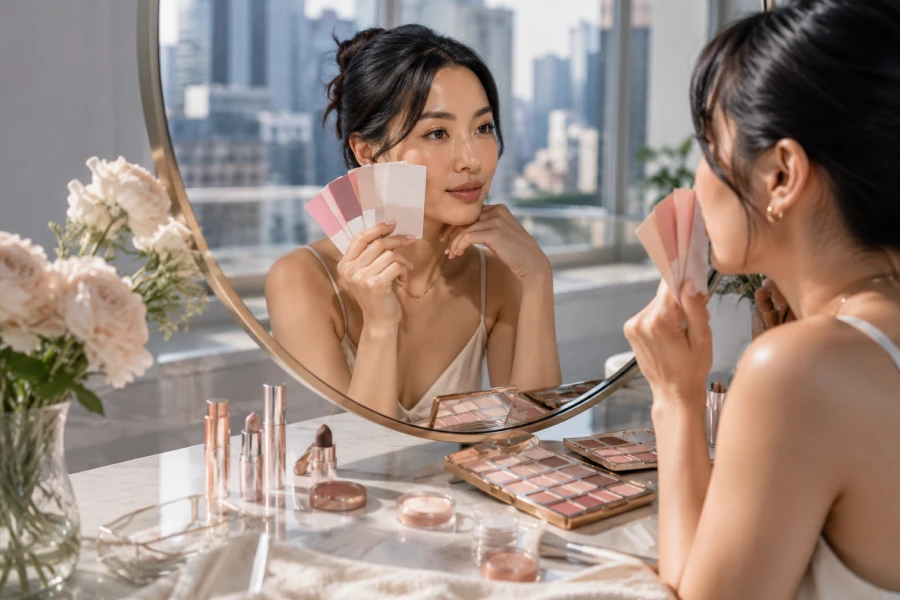
Color usually feels easy online and harder at the mirror. The best makeup color palette inspiration works because it begins with real preferences. It studies what you already wear without forcing a dramatic reinvention. A beige sweater, silver earrings, or coral manicure can offer clues. Your makeup should speak to those familiar choices. A practical signature makeup style starts by respecting your existing taste. That respect makes experimentation feel safer and more polished. It also prevents a beautiful palette from becoming unused decoration. The final colors should feel like an upgrade, not a disguise. Once the palette fits daily life, confidence follows naturally. This starting point keeps the palette grounded. It also makes each shade feel easier to trust. Color begins supporting identity instead of distracting from it.
Look first at the colors that survive your busy mornings. These shades reveal comfort more honestly than saved celebrity images. Notice the blush you reach for without thinking. Check the lipstick that disappears fastest in your bag. Study the shadows with the deepest pan marks. Those choices show what your face already accepts. They also show which colors earn trust repeatedly. Build around them before adding anything adventurous. Familiar color gives the palette an anchor. From that anchor, new shades feel exciting instead of random. Those favorites are not accidents. They are evidence gathered through real mornings. Let them shape the first version of the palette.
Lighting can change the entire meaning of a cosmetic shade. That makes this palette work stronger when you test every tone twice. Morning light may soften beige, peach, and rose. Bathroom bulbs may intensify shimmer and make cool colors sharper. Outdoor light can expose undertones you missed indoors. Compare swatches beside your jaw, wrist, and favorite clothing. A calm color story builder keeps these observations organized while you edit. The palette becomes more reliable with each light test. You learn which shades flatter in motion. You also stop blaming yourself for products that were never right. Small lighting tests prevent expensive disappointment. They also make undertones easier to understand. A shade should flatter more than one environment.
Texture gives a palette personality before color speaks loudly. Cream blush can make muted tones feel fresh and relaxed. Powder bronzer can make warmth look polished and controlled. Gloss turns familiar pink into something more playful. Satin shadow makes neutrals feel expensive without adding drama. Place textures beside the colors instead of judging them separately. A color may fail matte and succeed glossy. Another may need softness to feel wearable. Texture also decides how formal the final look becomes. This layer makes the palette more expressive and less flat. Texture can make a quiet color memorable. It can also soften a shade that first looked difficult. This is where the palette gains dimension.
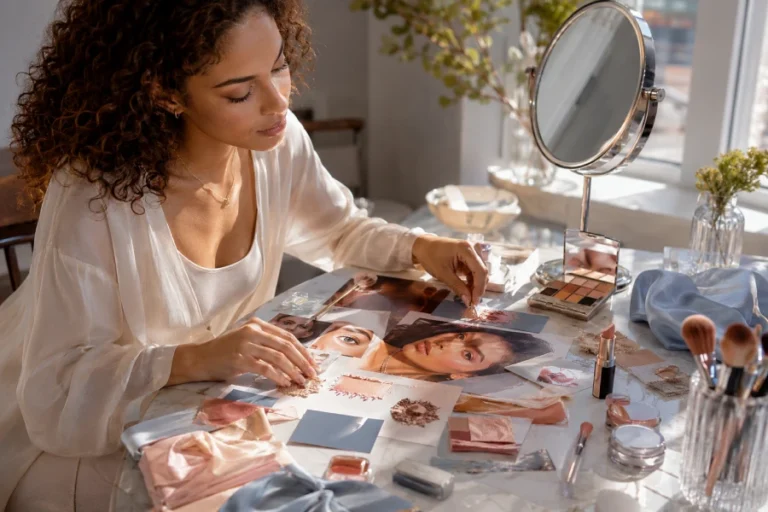
Overcomplication often begins when every shade looks equally possible. This palette work loses value when it contains too many directions. Choose one everyday family, one evening accent, and one seasonal surprise. Keep each role clear before adding new products. Remove colors that require a completely different wardrobe. Avoid shades that only work with heavy editing. A focused makeup look organization process keeps the board stylish without becoming crowded. The strongest palette does not need every option. It needs the right options. Clear limits make creativity easier to use. Editing is not a loss of creativity. It is a way to keep the story readable. A smaller palette can feel far more luxurious.
Repeatable looks turn color planning into daily relief. This palette work should suggest combinations, not isolated pretty shades. Pair a base color with one cheek tone and one lip finish. Create a second combination for brighter days. Save a third for evenings or photos. Keep the formulas simple enough to remember without notes. Then test each one during normal routines. The palette succeeds when it survives real timing. It should help you get ready faster. It should also make each look feel intentionally chosen. Take photos only for your own reference. Notice which combinations still appeal later. The strongest pairings will ask to be repeated.
The finished palette should lead to action. Choose one combination for regular days. Choose another for soft evenings. Keep one brighter option for moments that need energy. Write those pairings in simple language. Place the products together for a week. Notice which look requires the least correction. Notice which look receives the most natural confidence. Adjust only one shade at a time. The palette becomes stronger through use, not theory. This last step turns color into confidence. The routine feels more edited with less effort. Your choices begin to look intentionally connected.


Leave a comment